Ask a Secondary 3 student which subjects keep them up at night, and the answer is almost always the same three: physics, chemistry and math. They're the subjects where the jump from lower secondary is steepest, where one shaky topic quietly undermines the next, and where a student can go from "I'm fine" to "I'm lost" in a single term.
We teach coding, not physics. But the kids who do best in our classes are very often the ones who are also comfortable with science and math, and the reverse is true too. So when parents ask us about tuition for these subjects, we're happy to share what we've seen work.
Quick Answer: Physics, chemistry and math tuition matters because these subjects are cumulative. A gap in algebra, forces or moles doesn't stay small; it shows up again in every topic built on top of it. Good tuition finds those gaps early, explains the concepts properly instead of drilling answers, and makes the subject feel interesting rather than just hard. In Singapore, MindQuest Learning Hub is a strong example, with O Level physics tuition and A Level physics tuition taught by Mr Lai, plus MQFlux, a new learning platform built with DotCode Campus.
Why These Three Subjects Are Different
Most subjects let a student recover from a bad chapter. Forget one history topic and the next one still makes sense. Physics, chemistry and math don't work that way. They're built like a staircase:
- Math underpins everything. A student who isn't confident rearranging equations will struggle in kinematics, electricity and stoichiometry, even if they understand the science.
- Physics asks students to picture things they can't see, like fields, waves and forces, and then describe them with numbers.
- Chemistry moves between the visible (a colour change in a test tube) and the invisible (electrons moving between atoms) in the same question.
When a step is missing, students compensate by memorising. That works for a while, then the questions change shape in an exam and the memorised method doesn't fit. That's usually the moment parents start looking for help.
What Good Tuition Actually Does
Tuition gets a mixed reputation in Singapore, and some of it is deserved. More worksheets and more hours aren't the same as more understanding. The tuition that genuinely moves grades tends to do four things:
- Diagnoses before it teaches. It finds the specific gap, whether that's vectors, mole calculations or differentiation, instead of re-teaching the whole syllabus.
- Explains the why. Students who understand why a formula works can adapt it to an unfamiliar question. Students who memorised it can't.
- Practises with purpose. Targeted questions on the weak topic, then mixed questions that look like the real exam.
- Keeps the student interested. This is the one most often skipped, and it matters more than people think.
Why Enjoyment Matters in Physics

A teenager who finds physics boring will do the minimum. A teenager who finds it exciting will think about it on the bus, notice it in the real world and ask "but why?" in class. That curiosity does more for their grades than any number of extra practice papers.
That's why we think so highly of how Mr Lai teaches physics at MindQuest. His lessons are hands-on and full of energy. Instead of starting with a formula on the whiteboard, he starts with something students can see, touch or argue about, and lets the physics explain it. Concepts like momentum, circular motion and electromagnetic induction stop being abstract chapters and become things that happen in the room.
He's also a genuinely charismatic teacher. Students talk about looking forward to his lessons, which isn't something you often hear about physics. When a student enjoys the subject, the hard work stops feeling like a chore, and that's when results follow. For many of his students, physics goes from the subject they dread to the one they're proudest of.
MQFlux: A Next-Generation Learning Platform, Built With DotCode Campus
Good teaching in class is half the picture. The other half is what happens between lessons, when a student is at home, stuck on a question and the teacher isn't there.
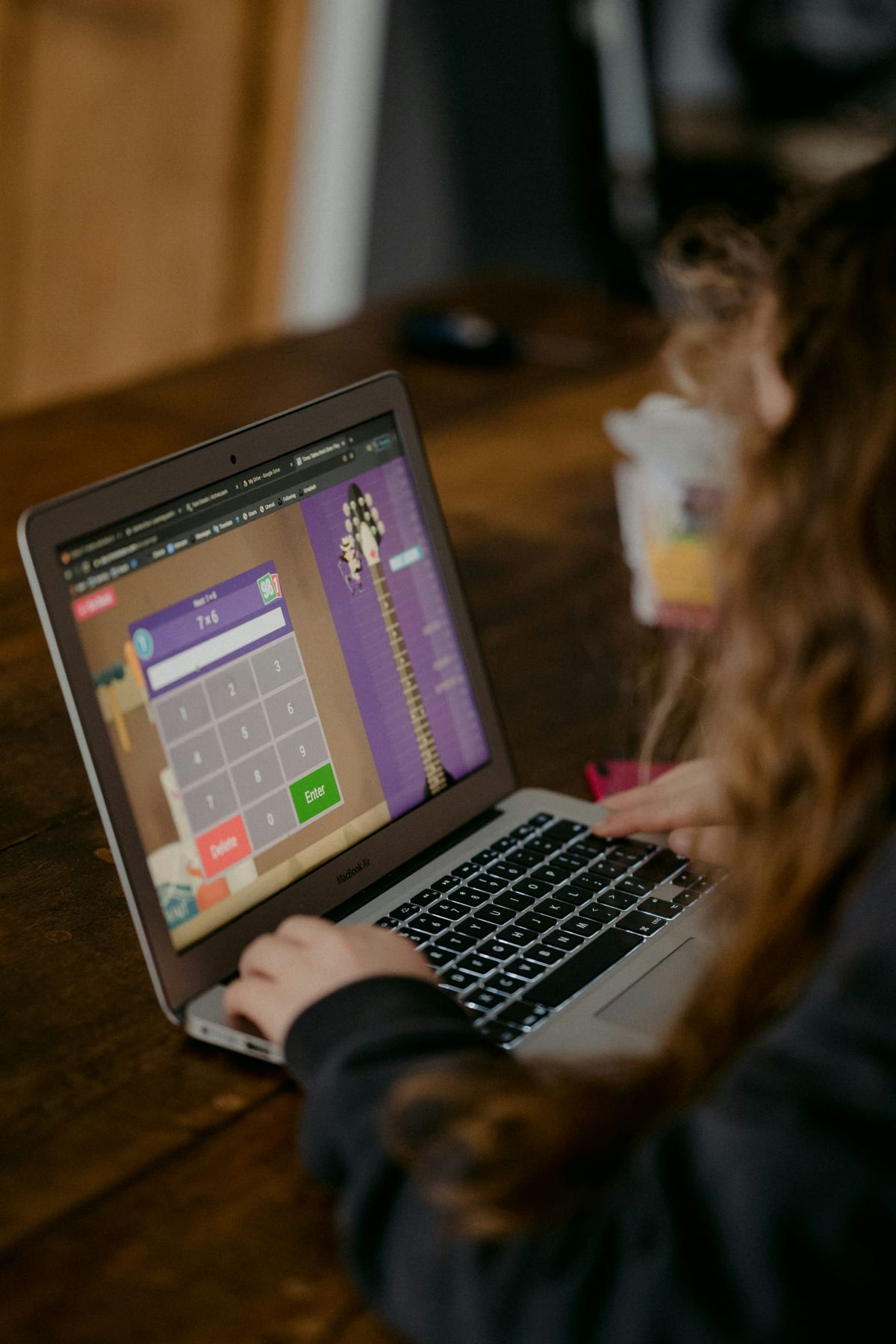
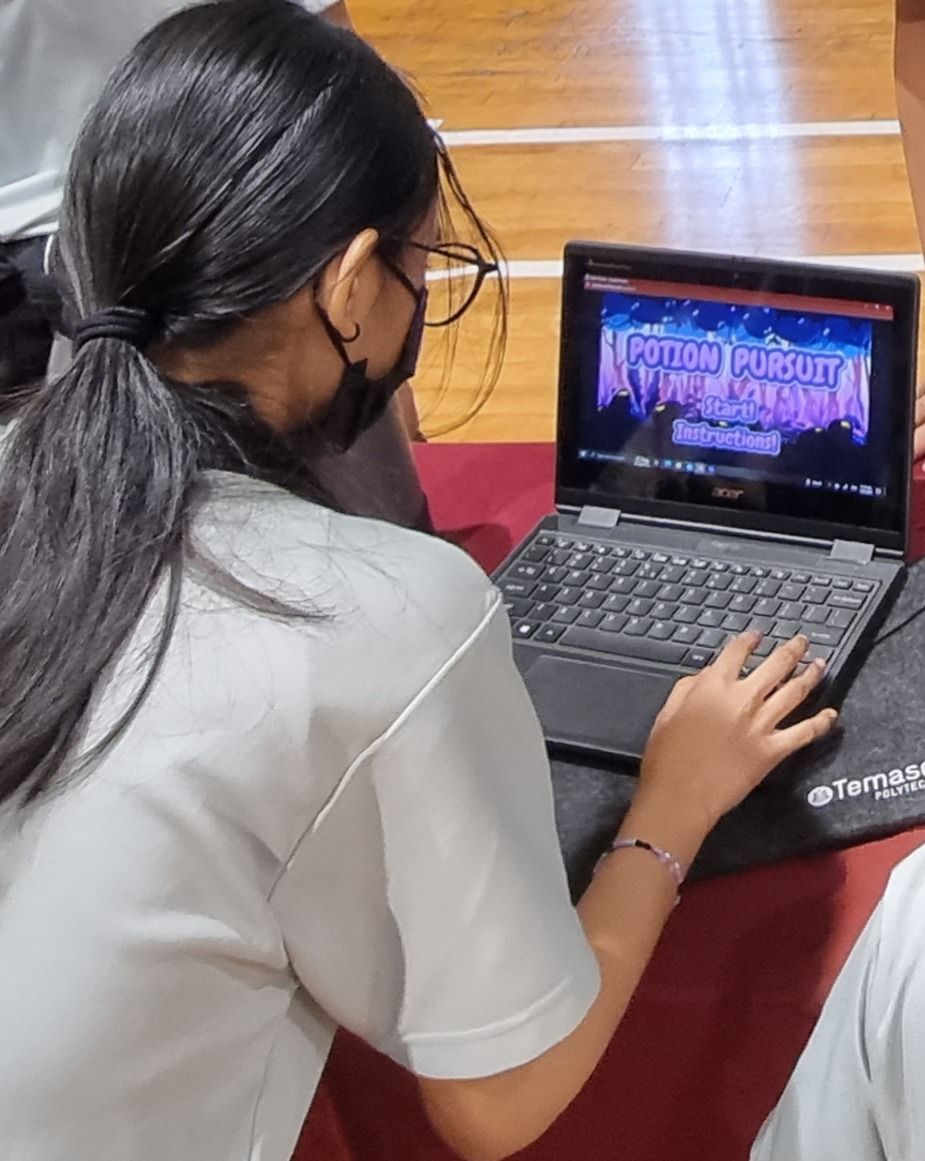
MindQuest has launched MQFlux, a brand-new, next-generation LMS (learning management system), and we're proud to say we built it together with them at DotCode Campus. It's designed to help students learn physics concepts quickly and thoroughly:
- Next-gen animations show what's happening inside a concept, like how a wave travels, how charges move in a circuit or how forces combine, so students can see the physics instead of just reading about it.
- Interactive tools let students change a variable and watch what happens, which is the fastest way to build real intuition.
- Adaptive quizzes adjust to each student as they answer. Get a question right and the next one is harder; get it wrong and the quiz steps back to rebuild the idea underneath. Because every question is tied to a specific sub-concept, the platform tracks exactly which ones a student is weak in. Not just "electricity", but potential dividers, or internal resistance. Students, parents and tutors can see precisely what needs work, and practice goes straight to it.
- Structured practice reinforces each concept straight after it's taught, so it sticks.
- A rewards marketplace keeps students motivated. They earn points for completing lessons and quizzes, then redeem them for rewards. It gives teenagers a reason to log in and practise on the days motivation is low, and turns steady revision into a habit.
Animations and interactive tools are especially powerful for physics, because so much of the subject is about things that move, change or can't be seen. A diagram in a textbook is frozen. An animation shows the whole process, and lets a student replay it as many times as they need until the idea clicks. Adaptive quizzes then check that it really has clicked, and catch a weak topic before it turns into a gap. Combined with Mr Lai's teaching in class, it means concepts are ingrained, not just memorised the night before a test.
O Level vs A Level Physics: What Changes
The gap between O Level and A Level physics catches many students off guard. At O Level, questions mostly test whether a student can apply a known idea correctly. At A Level, H2 Physics expects them to combine several ideas in one question, handle more demanding math, and explain their reasoning precisely.
Students who built their O Level physics on understanding rather than memorisation make that transition far more smoothly. MindQuest offers both O Level physics tuition for secondary students and A Level (JC) physics tuition for H2 students, so the same approach carries straight through.
Don't Forget Chemistry and Math
Physics rarely struggles alone. A student weak in algebra will find physics calculations harder than they should be, and chemistry's mole concept trips up even strong students. It's worth looking at the three together.
MindQuest also offers O Level chemistry tuition, E Math and A Math tuition for secondary students, and H2 Math tuition for JC students, at centres in Eunos and Jurong East.
Where Coding Fits In
Physics, math and coding have more in common than most people realise. All three are about breaking a problem into steps, spotting patterns and testing whether your answer makes sense. Students who code often find physics simulations and math functions easier to picture, and students strong in physics and math pick up programming faster. If your child enjoys both, our guide to Python for kids is a good next read.
Getting Started
If your child is finding physics, chemistry or math hard going, the earlier you act, the smaller the gap is to close. The best first step is to find out exactly where the gap is.
Have a look at MindQuest's O Level physics and A Level physics programmes, and see what a lesson with Mr Lai, backed by MQFlux, can do for your child.