Game Development Course for Teens Game Development with Construct 3
Your child already loves games. Let's put that to work.
A game development course for teens: turn hours of gaming into skills that last — logic, problem-solving, and the confidence to build something of their own.

// overview
About This Course
Most kids can tell you everything about their favourite game — the levels, the characters, the tricks to win. What they can't tell you is how any of it works. That's the gap this game development course for teens closes.
Instead of spending another afternoon playing someone else's game, your child learns to design and build their own — from the first character on screen to a finished game they can share with family and friends.
Along the way, gaming stops being one skill. It becomes many: logic, planning, debugging, and thinking about the person on the other side of the screen. This course is one of our coding programs for teens aged 12–17, taught live in small groups — online, or in person at our Jurong East studio.


// holiday camp · Nov–Dec 2026
Game Development Holiday Camp: one week in the holidays
Monday to Friday, 2 hours a day, in person at our Jurong East studio or live online. S$490 for 10 hours of class. Tap a week to message us on WhatsApp, with the dates already typed for you.
Unsure? Book a free trial before the camp to test it out.
// skills
What Your Child Will Learn
Events & Game Logic
Every game runs on cause and effect: when the player presses jump, then the character jumps — but only if they're on the ground. Chaining events, conditions and actions is the same if-then reasoning behind every programming language they'll meet later.
Loops & Patterns
Enemies that keep spawning. Coins that respawn every round. Loops make things repeat — and spotting patterns lets you do more with less code. It's the start of thinking like a programmer instead of typing like one.
Variables & Game State
Score, health, lives, timers — games track everything with variables. Your child learns to store, change and use information: the same concept that powers everything from spreadsheets to apps.
Testing & Debugging
Things break. Characters fall through floors, scores count backwards. Rather than giving up, your child learns to hunt down the bug, form a theory, and test the fix — the patience every builder needs.
Designing for Players
The part most coding courses skip. A game isn't finished when it works — it's finished when someone else can play it. Students watch classmates try their games, see where players get stuck, and redesign until it clicks. Building for others, not just yourself, is empathy in practice — and it goes far beyond games.
// the platform
Why Construct 3?
Construct 3 is a professional game engine used to publish real games — but it's built so beginners aren't buried in syntax on day one.
Students build with visual blocks of logic instead of typing code, so they can focus on how programming works rather than where the semicolon goes. As they grow, Construct 3 lets them add real JavaScript — a clear path from first game to actual code.
No prior coding experience needed. If your child can play a game, they can start building one.
// curriculum
The Learning Journey
10 lessons · 6 modules · every module ends with a working project
Welcome to Construct 3
Tour the editor, learn sprites and layouts, and use built-in behaviors to get a character moving. Every student has a playable scene by the end of class one.
Events: How Games Think
The heart of Construct: event sheets. Students learn conditions and actions by building a complete arcade-style collecting game with score and lives.
Platformer Project
Jumping, enemies, hazards, and collectibles. Students design multi-level platformers and learn what makes a level feel fair, challenging, and fun.
Variables & Game State
Health bars, power-ups, timers, and win/lose conditions. Students learn how games track everything — the same logic concepts used in text-based coding.
Top-Down Games & Effects
A second genre: top-down movement, spawning enemies, and pathfinding. Students add sound effects, particles, and screen shake to make games feel alive.
Final Game & Launch
Students design and build an original game from scratch — their genre, their rules, their art — then publish it to the web and present it at demo day.
// why dotcode
Why DotCode?
We're not a franchise running off a script. Every class is led by an experienced instructor with years of teaching coding to kids across Singapore's schools and academies — from Scratch and Roblox to Python and web development.
-
Small groups, real attention. Every student gets time with the instructor, not just a worksheet.
-
Projects over theory. Kids learn by building, breaking and fixing — every lesson ends with something on screen.
-
Concepts that transfer. We teach the logic underneath the tool, so it carries into Python, JavaScript and beyond.

// the course
The Course at a Glance
Try it free first
Book a free trial lesson — your child builds their first mini-game, and you see exactly how we teach before committing to anything.
Book a Free Trial Lesson// outcomes
By the End of the Course
By the end, your child walks away with a finished, playable game they designed, built and tested — something they can proudly show off.
- A finished, playable game they designed, built, and tested themselves
- Genuine logic and game-design skills: events, variables, state, and feedback loops
- Experience finishing and shipping projects — not just starting them
- A natural stepping stone into JavaScript or text-based coding with Python
// questions
Game Development with Construct 3: FAQ
Who is this game development course for?
Teens aged 12–17, and complete beginners are welcome. No coding experience is needed. Kids aged 7–12 usually start with our Roblox coding classes instead.
Where are your game development courses in Singapore held?
In person at our Jurong East studio, or live online with the same instructor and the same projects. Both run as small groups of up to 6 students.
Why Construct 3 instead of Unity?
Construct 3 lets beginners focus on game logic — events, conditions, variables and game state — without getting stuck on syntax. Unity assumes students can already program and needs a powerful computer. Construct 3 runs in the browser, so there's nothing to install.
Is Construct 3 real programming?
Yes. Students write logic as events and actions instead of typed code, but the thinking is the same: conditions, variables, loops and debugging. That's why it's a natural stepping stone into JavaScript or Python.
What will my teen have made by the end?
An original game they designed, built and playtested themselves, published to the web so anyone can play it from a link. The course ends with a demo day where every student presents their game.
How long is the course?
10 lessons of 1.5 hours each. Every course starts with a free trial lesson, so your teen can try it before you commit.
Is there a holiday camp for Game Development with Construct 3?
Yes. The Game Development Holiday Camp runs every week from 23 Nov to 25 Dec 2026: one week, Monday to Friday, 2 hours a day, in person at our Jurong East studio or live online. It costs S$490 for 10 hours of class. Unsure? Book a free trial class before the camp to test it out.
// from the blog
Guides for Parents
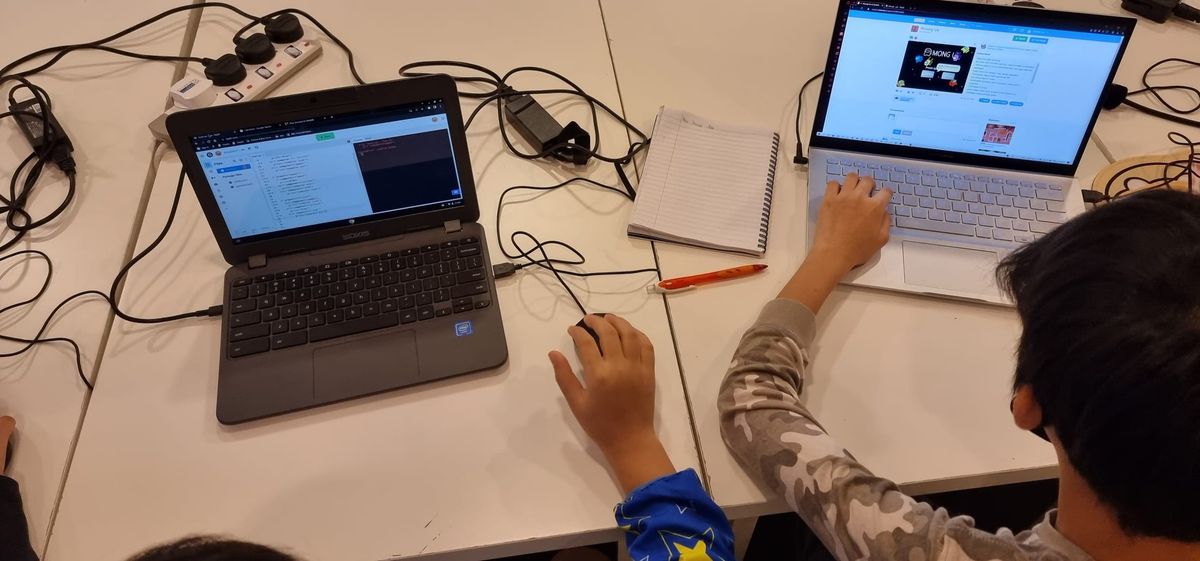
What Comes After Scratch? The Next Step for Kids Who've Outgrown Blocks
Your child has built every Scratch game they can think of and wants more. Here are the real options for what comes next, and how to match one to your child rather than to a list.
6 min read Read
The Benefits of Game Development for Kids: Coding, Creativity and Empathy
Building a game teaches events, loops and logic, then asks for creativity and empathy on top. For a child who loves games, it never feels like homework.
8 min read Read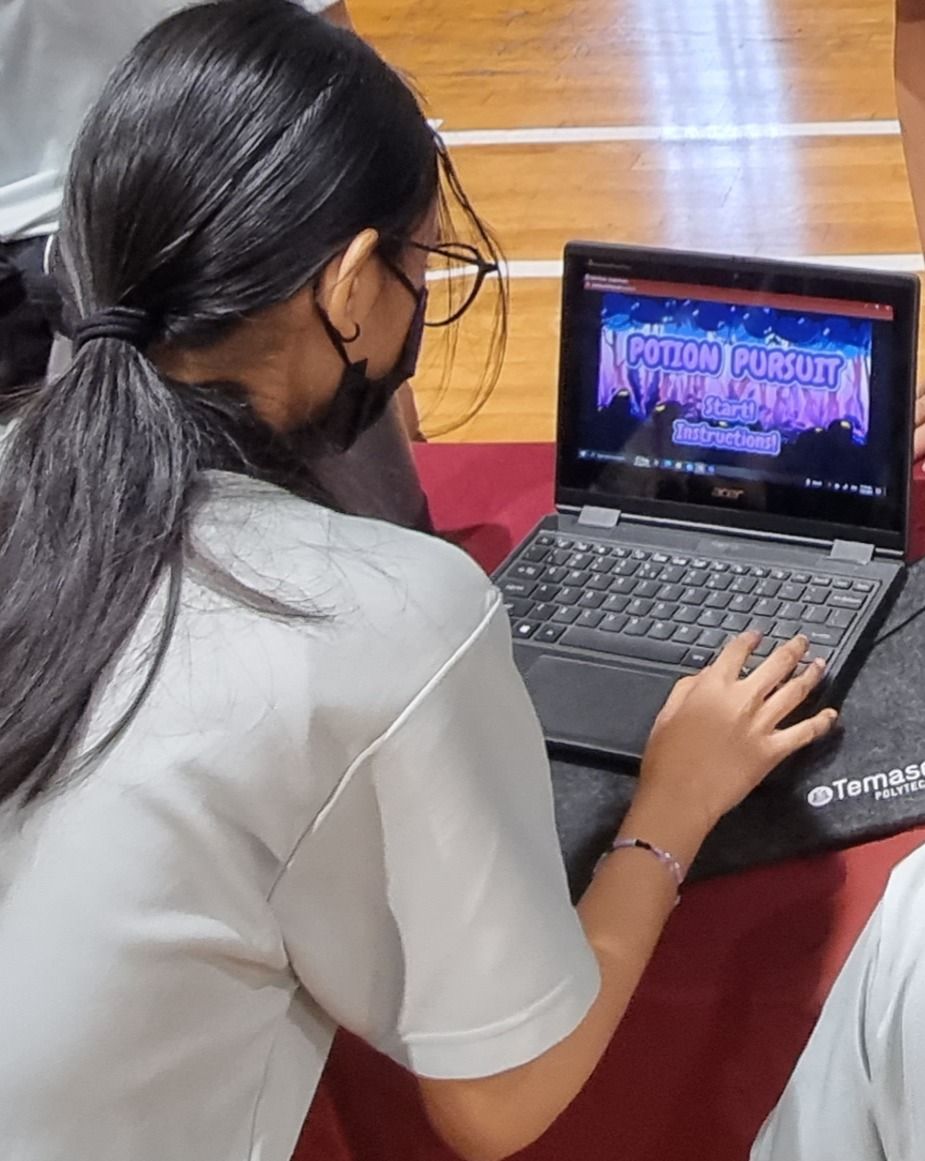
Game Development Courses for Kids and Teens in Singapore: A Guide by Age
A 7-year-old and a 15-year-old both want to make games, but they need very different courses. Here is what fits at each age, and how to tell when they are ready to move up.
5 min read ReadReady to Start Building?
Book a free 45-minute trial class. No commitment, no credit card — just great learning.