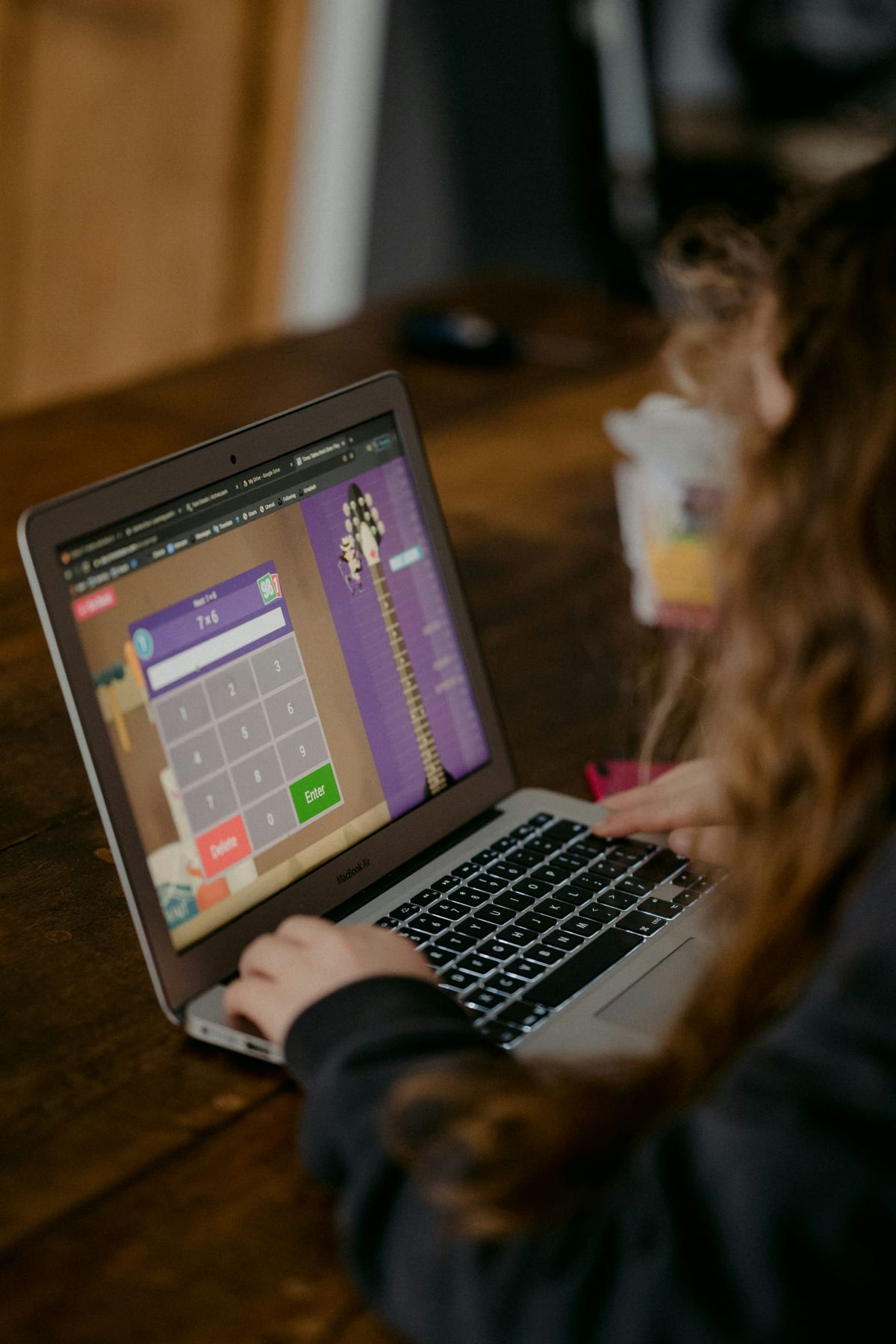
Watching your teenager study for exams might feel familiar. The formulas they memorize are the exact same ones you learned years ago. Yet the careers waiting for them look entirely different today. A perfect A1 used to guarantee a spot in top engineering or science programs at NUS or NTU. Now, university admissions boards and tech employers want more. They are looking for problem-solvers who know how to wield modern technology. If your child wants to thrive in a highly competitive STEM landscape, they need to stop being passive tech consumers and start creating.
Quick Answer: For Singapore students aiming for top university STEM programs, excellent O-Level or A-Level Physics and Maths grades are now just the baseline. To thrive in future careers, teenagers must pair the rigorous underlying logic learned in traditional sciences with modern computational skills. Enrolling in a python class for teens or an ai coding class allows students to apply physical laws through programming, giving them the exact practical portfolio that modern universities and tech employers demand.
The Reality Check: Why Straight As Are No Longer Enough in University
In Singapore’s competitive academic environment, achieving stellar grades is a great milestone. However, securing a spot in top-tier university programs like Computer Science, Data Analytics, or Advanced Engineering requires an extra edge.
Everyone applying to these programs has excellent grades. University admissions officers and Direct School Admission (DSA) panels increasingly look for a holistic portfolio. They want to see what a student can actually build with their knowledge. A student who can recite physical laws on paper is common. A student who takes that knowledge and builds an interactive web application to demonstrate a physics concept instantly stands out.
Universities search for evidence of independent learning, logical thinking, and practical application. Relying strictly on exam scores leaves ambitious students vulnerable to being outshined by peers who bring a demonstrable tech portfolio to the interview table.
How Modern STEM Careers Are Radically Changing
The traditional image of a scientist isolated in a lab or an engineer drafting blueprints by hand is mostly obsolete. Today, almost every prestigious STEM career relies heavily on computation.
Aerospace engineers write scripts to simulate aerodynamic drag. Quantitative analysts rely on complex algorithms to predict financial markets by merging high-level math with programming. Biologists process massive genome sequences using data automation.
Many parents assume their teenagers are tech-savvy just because they spend hours on digital devices. There is a massive gap between consuming tech and creating it. Knowing how to use mobile apps or prompt ChatGPT to write an essay falls short of what future industry leaders need. To survive and thrive, students must understand the mechanics of large language models and combine AI APIs with their own logic to build real solutions.
The Ultimate Synergy: Why Math and Physics Are Also a Must
While it makes sense to embrace the AI wave, students still need traditional academics. Core STEM subjects provide the crucial underlying logic required to truly excel in technology.
Mathematics provides the raw algorithmic thinking, teaching students how to process variables and recognize patterns; studying physics then takes that math and applies it to the real world, training the brain to break down complex problems into manageable rules. Coding is simply taking that same analytical mindset and using it to instruct a computer. All three disciplines require rigorous deduction and the resilience to 'debug' errors in your thought process, whether it's a miscalculated equation or a broken line of code.
This is why mastering the school curriculum remains non-negotiable. Building a rock-solid analytical foundation through expert Math and O-Level Physics Tuition sharpens a student's ability to think critically. Once this logical framework is built, they can seamlessly apply it in coding, turning abstract problem-solving skills into tangible digital creations. Physics trains the logical mind; coding gives that mind the tools to build the future.
Beyond the Hype: Building Real Skills with AI and Python
To bridge the gap between theoretical physics and modern technology, teenagers need a structured environment to apply abstract concepts to tangible projects.
By following a comprehensive tech learning path, students graduate from merely using apps to writing the software behind them. A practical and robust tech curriculum for 13 to 17-year-olds should cover these three core pillars:
- Python Programming Fundamentals: Students go beyond reading a basic python tutorial. They learn loops, conditionals, and data structures to automate complex math and physics calculations, while developing crucial habits like reading errors and debugging.
- Python for AI: Instead of just chatting with an AI, a hands-on ai coding class has students build their own language model in Python — so they understand how tools like ChatGPT actually work, and why they can sound confident while being wrong.
- AI Image & Video Generation: Once students understand how a language model writes, the next step is how AI draws. They extend the same ideas to build an image and video generator from scratch — the idea behind tools like Midjourney and Sora — and come away with a standout project for university portfolios.
Conclusion: Investing in the Ultimate Toolkit
The future of STEM is hybrid. The innovators who will lead the next generation possess deep domain knowledge alongside technical execution skills. Focusing only on AI without hard sciences leads to superficial work, but knowing the physics curriculum without knowing how to code limits a student's reach in a digital world.
Start building these essential skills before the university application crunch begins. Once their school foundation is set, give them the ultimate competitive edge. Equip your child with the hands-on, project-based programming skills they need to become future tech leaders.