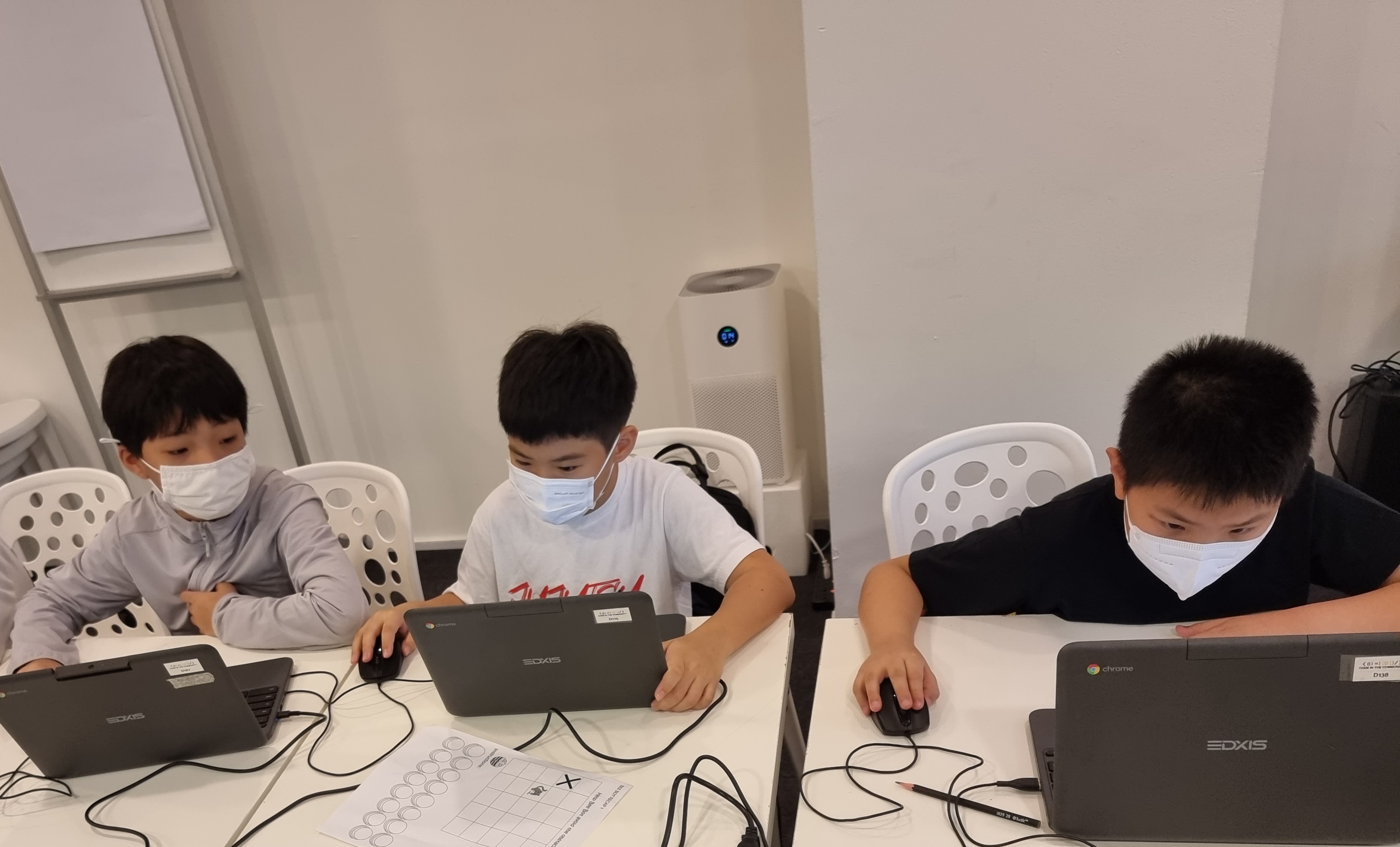
Search for coding classes for kids in Singapore and you'll find dozens of options: robotics centres, Scratch clubs, holiday camps, Python courses, and now a wave of AI classes. They all promise your child will "learn to code". They don't all mean the same thing by it.
I run a coding school, so I'm obviously not neutral. But most of this guide applies wherever you enrol, and I'd rather you pick a good class somewhere else than a bad one anywhere.
Quick Answer: The best coding class for your child matches their age and interests, keeps groups small enough for real attention, and ends with projects they built and can explain. Kids aged 7–12 usually do best starting with visual or game-based tools like Scratch or Roblox; teens can move into text-based languages like Python, web development and AI. Always book a trial class before committing.
What Age Should Kids Start Coding?
Most kids are ready around 7, once they can read comfortably and follow a few steps in order. Before that, "coding" is mostly sequencing games and robots, which is fine, but it isn't really programming yet.
A rough guide:
- Ages 7–9: visual, block-based tools. The goal is logic — sequences, repeats, and if-then — not syntax.
- Ages 9–12: game-based platforms where they start writing small scripts. Roblox Studio is a popular bridge here because kids already know and care about the platform.
- Ages 12 and up: real text-based languages. Python is the usual first choice, and it's also the language used in O-Level Computing, which some secondary schools in Singapore offer.
Starting late is not a problem. A motivated 14-year-old beginner often catches up with kids who have "done coding" for years, because what matters is understanding, not hours logged.
Scratch, Roblox, Python or AI: Which Should They Learn?
Parents often ask which language is best. Honestly, the first language matters less than you'd think. The concepts underneath — variables, loops, conditions, functions, debugging — are the same everywhere. Pick the tool your child will actually want to open.
- Scratch is excellent for younger kids. Many primary schools already introduce it, so check what your child has done before paying for more of the same.
- Roblox works well for kids who play it. They build 3D worlds and write real scripts in Luau, and the motivation is built in: they want their game to work so friends can play it.
- Construct 3 and game development suit teens who love games but aren't ready for a blank code editor.
- Python is the most useful general-purpose language for teens, and the foundation for AI and data science.
- AI classes vary wildly. Some teach prompt-writing; others teach how AI actually works. For a teen, the second is far more valuable.
What to Look for in a Coding Class
Class size. Coding means getting stuck, and a child who's stuck for twenty minutes quietly gives up. Ask how many students there are per instructor. Small groups make a real difference.
Who teaches. Ask about the instructors' experience with both programming and teaching kids. You want someone who can explain why code breaks, not just read out the next step on a worksheet.
Projects, not just exercises. Ask what your child will have built by the end. A finished game, website or program they can show you — and explain — is a good sign. Certificates on their own are not.
Understanding over copying. Some classes have kids copy code line by line from a screen. It looks productive, and they learn very little. Ask the instructor how students are taught to solve problems on their own.
A clear next step. Good programmes have a pathway, so a child who finishes a Roblox course knows what comes next rather than repeating a similar course at a slightly higher price.
Online or In-Person?
Both can work well, as long as the class is live. Pre-recorded video courses have their place, but kids tend to stall the first time something doesn't work and nobody is there to ask.
In-person classes suit younger children and kids who focus better away from home. Live online classes save travel time and are useful for families who aren't near a centre. Singapore is small, but a long trip across the island every week adds up.
Questions to Ask on a Trial Class
- How many students are in a class, and how many instructors?
- What will my child have built at the end of the course?
- What happens when my child gets stuck?
- Is the class taught live, and is the content the same online and in person?
- What's the next course after this one?
- What does the full course cost, including any materials?
And afterwards, ask your child one question: "What did you make?" If they can explain it to you, that's a good class.
How We Do It at DotCode Campus
Since you're reading this on our site: at DotCode Campus we teach kids and teens aged 7–17 in live classes of up to 12 students. Younger kids usually start with Roblox coding classes for kids; teens choose from game development with Construct 3, Python, web development and AI classes, where they build their own language model from scratch.
Classes run in person at our studio in Jurong East, a short walk from the MRT, or live online for families anywhere in Singapore. Every course starts with a free 45-minute trial, so you can see exactly how we teach before deciding. Book a free trial class.
